
Vision Therapy
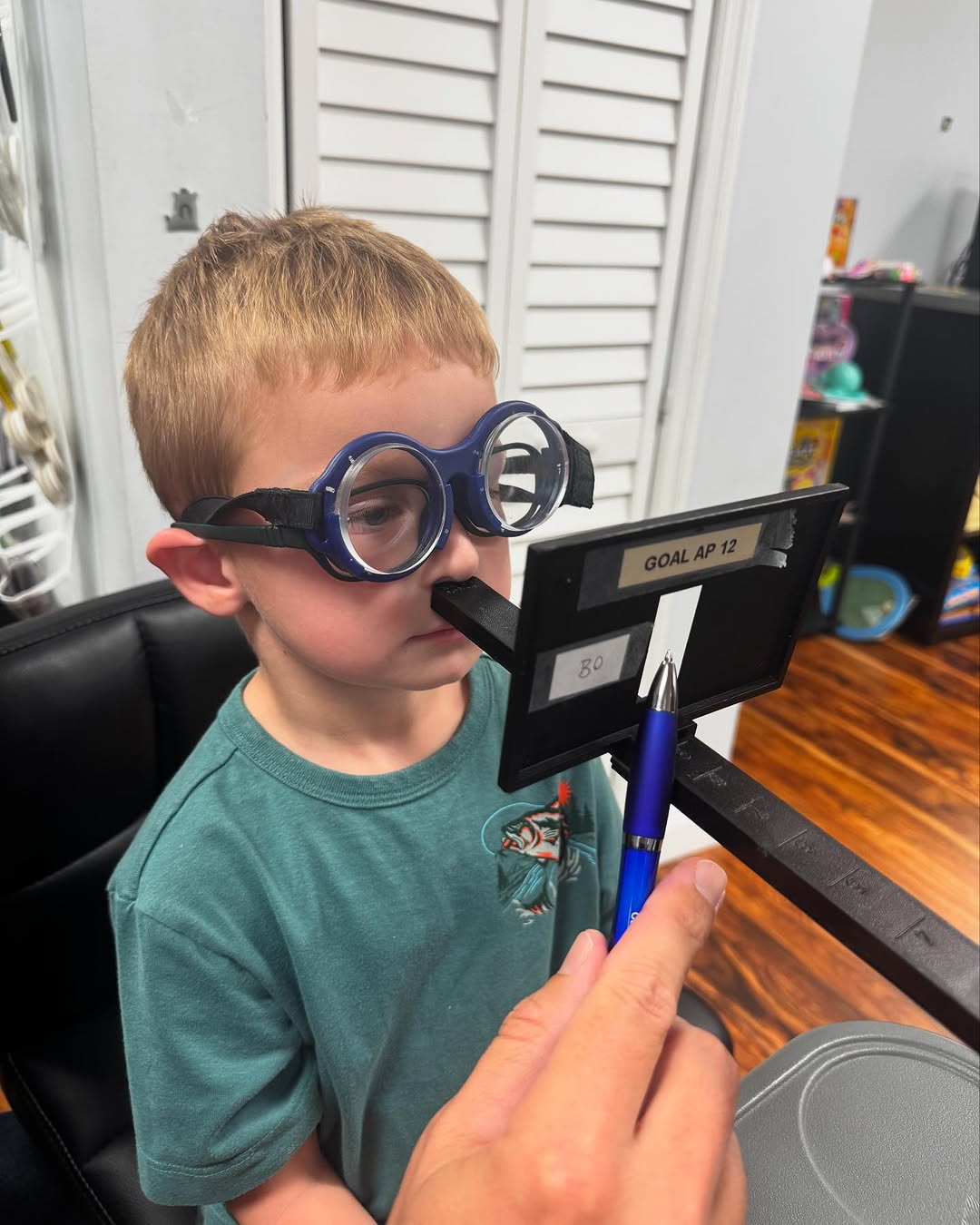
Vision’s Role in Learning Disabilities
Visual skills, far beyond 20/20 eyesight, provide the foundation for learning to take place.
While vision problems do not directly cause learning disabilities, they do interfere with the process of learning and can impede remedial efforts.
Due to similar symptoms, an undetected visual dysfunction can be misdiagnosed as ADD/ADHD, dyslexia or a reading disability. A comprehensive eye exam, which rules out a binocular vision dysfunction, is critical to determining if vision is a contributing factor.
Visual Dysfunctions
Workplace efficiency and different areas of learning can be impacted by visual dysfunctions, which encompass a large group of diagnoses, such as:
Convergence Insufficiency
The eyes do not turn inward properly when focusing on a near object.
Strabismus
One or both eyes will turn in or out more frequently under visual stress.
Amblyopia (lazy eye)
One or both eyes cannot be corrected to see 20/20 due to lack of visual development.
Eye Movement Disorders
Poor ocular motor control of smooth tracking and shifts in fixations.
CVS (Computer Vision Syndrome)
One of the fastest growing health concerns in the workplace. Excessive computer use can induce eyestrain, headaches and/or reduction in quality of life.
Poor Binocular Coordination (Eye Teaming)
The two eyes do not team well, which contributes to many early developmental delays in visual motor, visual auditory and vestibulo-ocular development.
Many times the above conditions cannot be treated with glasses, contact lenses or patching alone, and an optometric vision therapy program is required.